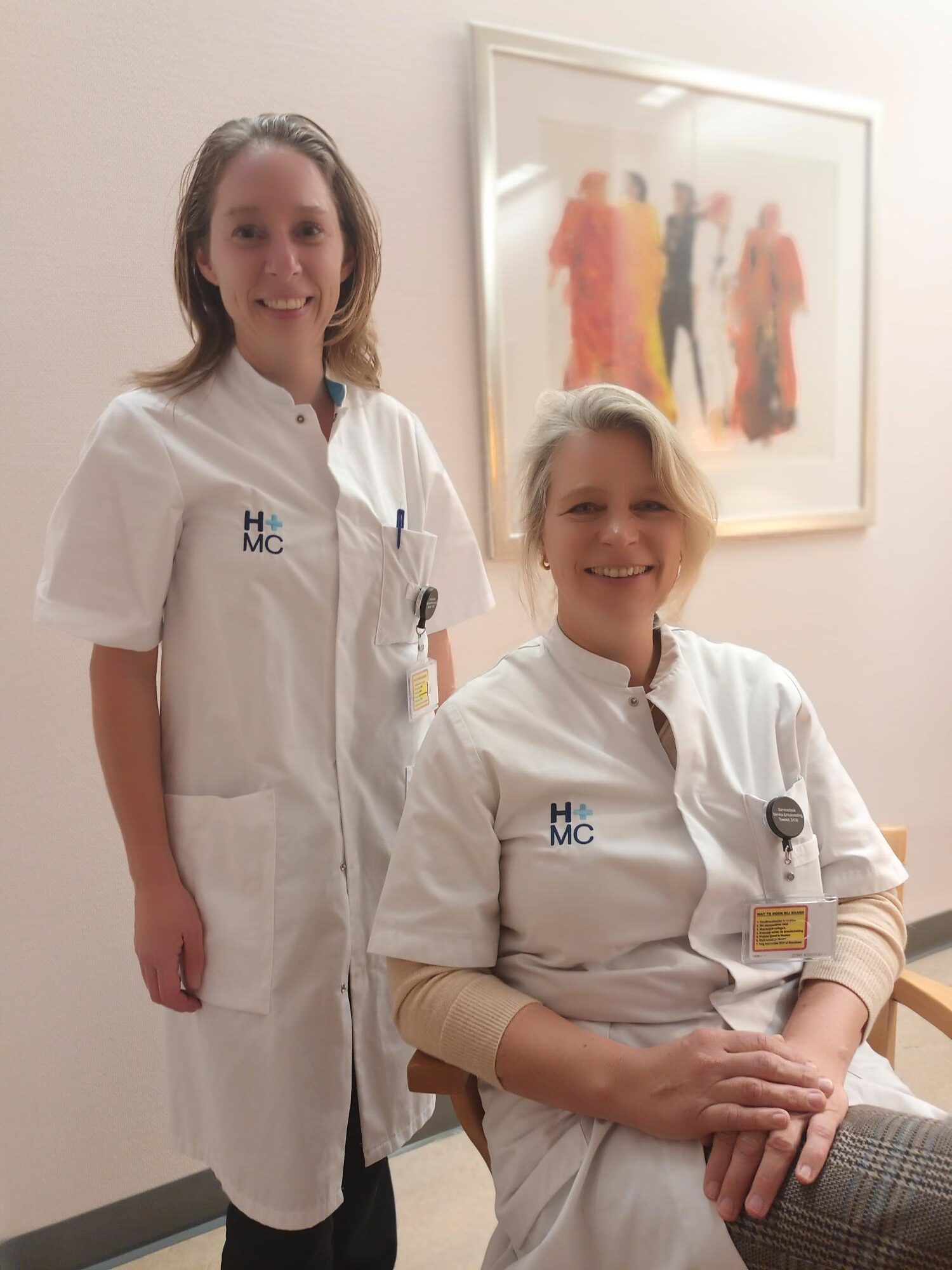
A conversation with Edith Beishuizen and Yvonne Ende-Verhaar of the Haaglanden Medical Center (HMC)
- December 19, 2023
- No category
Dr. Edith Beishuizen and Dr. Yvonne Ende-Verhaar work as internists specializing in vascular medicine at the Haaglanden Medical Center (HMC), which has three locations in The Hague and Leidschendam. To ensure the best possible care for children and adults with FH, the two work closely with various disciplines at their LEEFH center.
The team at the HMC’s LEEFH Center consists of two vascular internists, a nurse practitioner in internal medicine, two cardiologists, two pediatricians, and a chef de clinique. Research is conducted at this center into the various causes of high cholesterol. People with—or suspected of having—Familial Hypercholesterolemia (FH) are monitored and treated there. In the treatment of people with FH, continuity of care is very important, says Yvonne Ende-Verhaar. “If you see people regularly, you can guide them through starting treatment and continue to monitor them afterward. How are they doing? Are their blood values good? Suppose there are complications or the so-called target values are not being met; in that case, the treatment is adjusted accordingly.”
In addition, we also discuss how to inform the family. “When a new case of familial hypercholesterolemia is diagnosed, we discuss the importance of this for the family. Sometimes we notice that, even with a patient who has already been diagnosed, the issue hasn’t been properly discussed within the family, so not everyone knows that he or she may have FH and what the benefits are of knowing this. That with lifestyle advice and medication, you can keep cholesterol at a healthy level, thereby preventing cardiovascular disease,” says Edith Beishuizen. “We discuss this and recommend that the family contact LEEFH, where people can easily request a test kit.”
Desire to have children
Yvonne explains that the topic of pregnancy also comes up. “Women who want to have children stop taking the medication as soon as they start trying to conceive. The medication also cannot be used while breastfeeding. It’s important to inform women thoroughly about this. They often find it complicated. Their cholesterol was too high, and if they want to get pregnant, they have to stop taking it all. We don’t yet know exactly what the long-term effects are, which makes it difficult.” Colleague Edith adds: “On the other hand, the current generation of women who want to get pregnant often started taking statins at a young age. In that case, taking a short break isn’t so bad. We can reassure them that it’s not that bad to be exposed to high cholesterol for a limited time. But sometimes it’s still wise for a woman to see a cardiologist first before she stops taking the statin. We won’t tell someone they can’t have children, but it is important to discuss the risks with patients.”
Share
Share this article