In conversation with Remy Bemelmans: Gelderse Vallei Hospital now also a LEEFH center
- February 7, 2024
- No category
Dr. Remy Bemelmans is an internist-vascular physician at Gelderse Vallei Hospital in Ede. During LEEFH's tenth anniversary celebrations in October 2023, he realized that it was high time for a LEEFH center to be established at the hospital.
"Since children are screened and treated, the chance of them developing cardiovascular disease or even dying from it before the age of 45 is virtually zero."
"I find Familial Hypercholesterolemia interesting from a medical point of view, but it also has my attention because we are still far from knowing and treating all people who have FH. Let alone that they themselves know they have FH. I want to contribute to identifying these people." This is how Dr. Remy Bemelmans explains his involvement with FH. He is a vascular physician at Gelderse Vallei Hospital, which has been a LEEFH center since 2023. "I did my training and PhD at UMC Utrecht, which has a fairly large LEEFH center," he says. "Since then, I have been keen to find people with FH; to diagnose as many people with FH as possible, but also to inform their family members, who are often still completely healthy. Every child of a parent with FH has a fifty percent chance of inheriting it. This means that we can reassure about half of the family members who are tested with the message that they do not have it. They have often experienced a lot of cardiovascular disease in the family, so it is a relief for them that they will not have to deal with this themselves. For those who do have FH, it is unpleasant news, but fortunately we can immediately start treatment with medication and sometimes lifestyle changes to prevent them from developing cardiovascular disease. That is the positive thing about knowing you have FH: you can do something about it. That is good for the patients themselves, but certainly also for us as doctors.”
Complete families
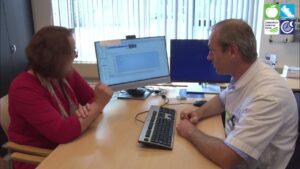
Remy treats adults and children with FH. "I don't do that with virtually any other condition, which makes it special. Sometimes parents and children come together, and I also treat the rest of their family. That's nice; you have a different kind of contact than with other patients. I advise parents to bring their children along even before they have been tested. That way, they get to know the hospital and it's less stressful if they turn out to have FH. Testing at an early age, when a child is eight, is also a good idea because then it hopefully becomes routine, something that is part of life. Once young people reach puberty, I see that they are less likely to take the step towards proper treatment and a healthy lifestyle. The younger you teach them that this is kind of normal, the better." The doctor cites a study by Bert Wiegman in the New England Journal of Medicine. Wiegman is a well-known and now retired pediatrician at Amsterdam UMC. "Since children are being screened and treated, the chance of them developing cardiovascular disease or even dying from it before the age of 45 is virtually zero. As a doctor, this reinforces my belief that it is very important to treat children with FH."
Head in the sand
The vascular physician encounters various barriers that prevent people from getting tested for FH. "Sometimes it's the blood test itself; quite a few people find that unpleasant. It also happens that they bury their heads in the sand a little; 'I don't have any symptoms and I don't want to suddenly find out that I have a disease for which I need to take medication'. I'm glad when they tell me what's bothering them, so we can talk about it. Sometimes people worry that they won't be able to get a mortgage or insurance, which isn't a problem for healthy people with FH. Very occasionally, I come across someone whose insurance company is being difficult. I have to point out to them that this is properly regulated in the Netherlands and isn't a problem." (See more information from the Dutch Association of Insurers at www.leefh.nl)
The doctor will never pressure anyone to get tested. "Everyone can decide for themselves what to do, as long as they have all the information. If someone then decides they don't want to know whether they have FH, that is a well-considered decision. However, I do advise them to look after their health, maintain a healthy lifestyle, and raise the alarm if anything is wrong. After all, they have a 50% chance of having a condition that can be very unpleasant if left untreated. And they can always come back for DNA testing for FH at a later date."
Bottom of the jug

Gelderse Vallei Hospital has been a LEEFH center since the end of 2023. "I was at the conference held in Amersfoort to mark the tenth anniversary of LEEFH, and I realized that we weren't doing everything we could at our hospital to identify people. I see people once a year and always ask whether they have managed to inform the whole family that FH runs in the family. However, there is so much to discuss during a consultation that I cannot ask any further questions. There are also patients who have opted out of check-ups in the past. Nowadays, we check whether those people are still being seen by their GP, but the fact is that some of them have fallen off the radar. All this gave me the feeling that we were not making the most of the situation. Together with LEEFH, which takes screening very seriously, we are now doing just that."
Share
Share this article