FH Awareness Day 2024: Interview with Willemijn Corpeleijn
- September 24, 2024
- No category
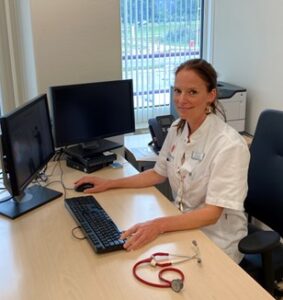
Willemijn Corpeleijn is a pediatrician specializing in metabolic diseases at Amsterdam UMC. In mid-2023, she took over the care of children with FH from the retired “Dr. Bert” Wiegman.
“It’s a really great job and so much fun to do,” Willemijn begins. “I feel a sense of responsibility to carry on and build upon everything Bert has established. He put the treatment of children with FH on the map, which was a huge step forward. He demonstrated that children can be treated safely and very effectively with statins. He has also done a lot to raise awareness of FH and the need to screen children. By the way, he’s still closely involved with FH Europe, the European patient association, so he hasn’t stepped away. We still collaborate a lot on scientific research.”
Fresh Start
“As normal as possible”—that’s Willemijn’s motto when it comes to treating children with FH. “In the office, I always emphasize that they aren’t sick, but that with medication and a healthy lifestyle, we can prevent them from getting sick. Eating healthy, not smoking, and exercising are good for everyone, so it’s not that unusual. It does depend on what the children have been through. For example, if a parent has had a heart attack, children are sometimes afraid. I try to reassure them that, in principle, they can live to be 120.” Parents sometimes need that reassurance too. “You never really treat a child alone. I try to involve parents in my decision-making process regarding whether treatment is necessary or not yet necessary. I also give parents tips on healthy eating. Sometimes I hear from parents that they themselves haven’t been to checkups in a few years. I try to motivate them a bit to set a good example for their child as well. A fresh start, and let’s all tackle this together!”
Investigation
Willemijn cites the screening of people who have FH but are not yet aware of it as one of the most important issues surrounding FH. “If you know what you have, you can do something about it. That’s a very important message; people need to be aware that this could run in their family and that they can request a test kit from LEEFH. This also applies to primary care physicians and internists, who need to be aware that high cholesterol can be a reason to investigate FH: if you identify just one person with FH, you may save multiple lives through family screening. LEEFH is doing fantastic work in this area, and I’m happy to join them in raising awareness so that we can identify as many people as possible.”
Gene therapy
The doctor also highlights the desire to have children as another important consideration. “If someone has FH and wants to have children, it is wise to also check whether there are reasons to believe that the partner might also have FH. For example, because there are many people in the family with high cholesterol or cardiovascular disease at a young age. A child who inherits FH from both parents has homozygous FH, including sky-high LDL cholesterol from birth. Some children with homozygous FH can suffer a heart attack as early as preschool age if the condition is undiagnosed and untreated. They therefore require very close monitoring and treatment. Couples who both have FH and wish to have children must therefore be thoroughly informed about the chances of having a child with homozygous FH and the options available to them. For this, they can, for example, be referred to a clinical geneticist. Children with homozygous FH must be treated as early as possible; this is very different from children with heterozygous FH (whom we usually treat starting at age 8). Fortunately, a lot of research is being done on FH. Gene therapy, for example, which may one day cure FH. It will take years before something like this becomes available to patients, but the developments are promising. That’s good news for everyone with FH, but especially for those with the homozygous form. You might not be able to completely eliminate FH in them, but things will improve significantly. I really hope that the children with FH today will be able to receive this therapy in the future.”
Share
Share this article