It remains important for patients to inform their families about FH
- July 17, 2020
- Population screening, The people of LEEFH
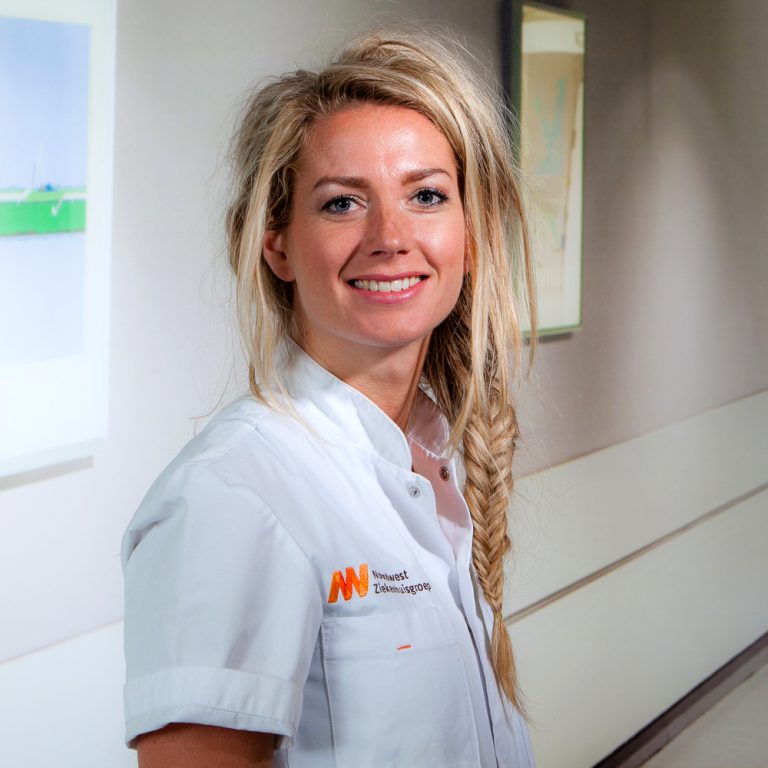
Marlies Betjes has been working as a nurse practitioner at the Noordwest Hospital Group in Alkmaar since 2012. More than twenty years ago, Dr. Sepers established a lipid clinic there. When Dr. Sepers retired, the clinic was taken over by Dr. Simsek and his secretary. In 2012, Marlies Betjes joined the hospital and was asked to join the lipid clinic. There, she began working with people with a confirmed FH mutation. She has been involved in this work since 2013. She and her colleague see most of the FH patients in the region there. Since 2016, Betjes has also been an FH consultant, a role she was asked to take on by the LEEFH Foundation. Previously, the LEEFH Foundation was known as STOEH, and the government had subsidized the population screening program at that time. Unfortunately, that program was discontinued. Unfortunately, because the families of people with FH could no longer be contacted directly. Everything now goes through the patient with FH, and that is where the healthcare providers’ influence ends. Because LEEFH was no longer allowed to conduct population screening, the foundation has asked various hospitals to cooperate in conducting additional family screening.
Pass it on!
"If a patient tests positive, they are treated and supported, and their family is informed that they can be tested, as they have a 50% chance of also having the mutation. We are working hard to keep track of this at the national level," says Marlies Betjes. The nurse specialist always emphasizes that it is up to the patient to decide what to do with the information about FH. "But of course, I explain that family members have a 50% chance of having the same mutation and, if so, that there is a higher risk of developing cardiovascular disease. It is, of course, very important that this happens, because if family members are identified, they can be treated in time. I always encourage them to pass this information on to their family! I also tell the patient how family members can request a DNA test kit so that they can be tested. Ultimately, it is up to the family to decide what to do with this information.
Betjes, who works in population screening, believes that things were better organized during the STOEH era. "We are trying to get back to that level, but we are not allowed to actively approach the family. Everything has to go through the patient. Every three months, we receive a list of patients who have tested positive from LEEFH. The family tree does not yet show whether a brother, sister, daughter, or son also has FH or has been tested. We always discuss this during the consultation hour.
The nurse practitioner sees a very large group of FH patients at the hospital. Of course, these aren’t all the FH patients in West Friesland. I’m missing the people who have tested positive but don’t necessarily come to the clinic. And I don’t know if the primary care physician actively asks the patient about it either. I only have an impact on the patients I see. I don’t see them all.
We see FH patients every six months. During those visits, we check their blood pressure and cholesterol levels, and every six months, patients go to the lab for a blood draw. I also pay close attention to lifestyle factors. Of course, we pay closer attention to cholesterol and are on the lookout for any vascular issues. People have been coming to the clinic for years, so you really build a bond with them. Families sometimes come with several members at once, sometimes with the whole family. That’s special, too. You keep a close eye on someone and hope you can prevent them from having a heart attack or stroke.
Eat sensibly
Betjes: 'I always emphasize this to young people: don't start smoking, and if you do smoke, quit. We also talk about healthy eating to prevent obesity, combined with sufficient exercise. Actually, this lifestyle advice also applies to people without FH. It's advice that anyone would want to give. I always tailor my advice to the patient and I also believe in eating sensibly. Eat plenty of fruit and vegetables, cook with olive oil, and be careful with animal fats. It really depends on how motivated someone is. You have to get a good feel for them and ask where their needs lie. If someone isn't motivated, it's difficult to change their lifestyle. Sometimes things have gone fundamentally wrong from the start. Then you can't expect to change that with a single consultation. The advantage is that they come back to the clinic every six months, so you can provide ongoing support. If someone wants to quit smoking, they can get help with that. So I also refer people to other services.
from an early age"If people are treated from an early age and start taking statins, you save lives," Marlies Betjes is convinced. The nurse specialist is happy with her job at the Northwest Hospital. "There has been a successful lipid clinic here for a long time. The clinic is well known here. I am also very happy with the good cooperation with the general practitioners. We regularly organize evenings with general practitioners to discuss how things are going at the clinic and how we can improve our collaboration. That works very well here in West Friesland. We also recently introduced an 'Fhtool', which uses an algorithm built into HIX to make it easier to detect FH patients. Several hospitals in the Netherlands want to start using this tool.
Text: Aefke ten Hagen
Image: Northwest Hospital Group
Share
Share this article