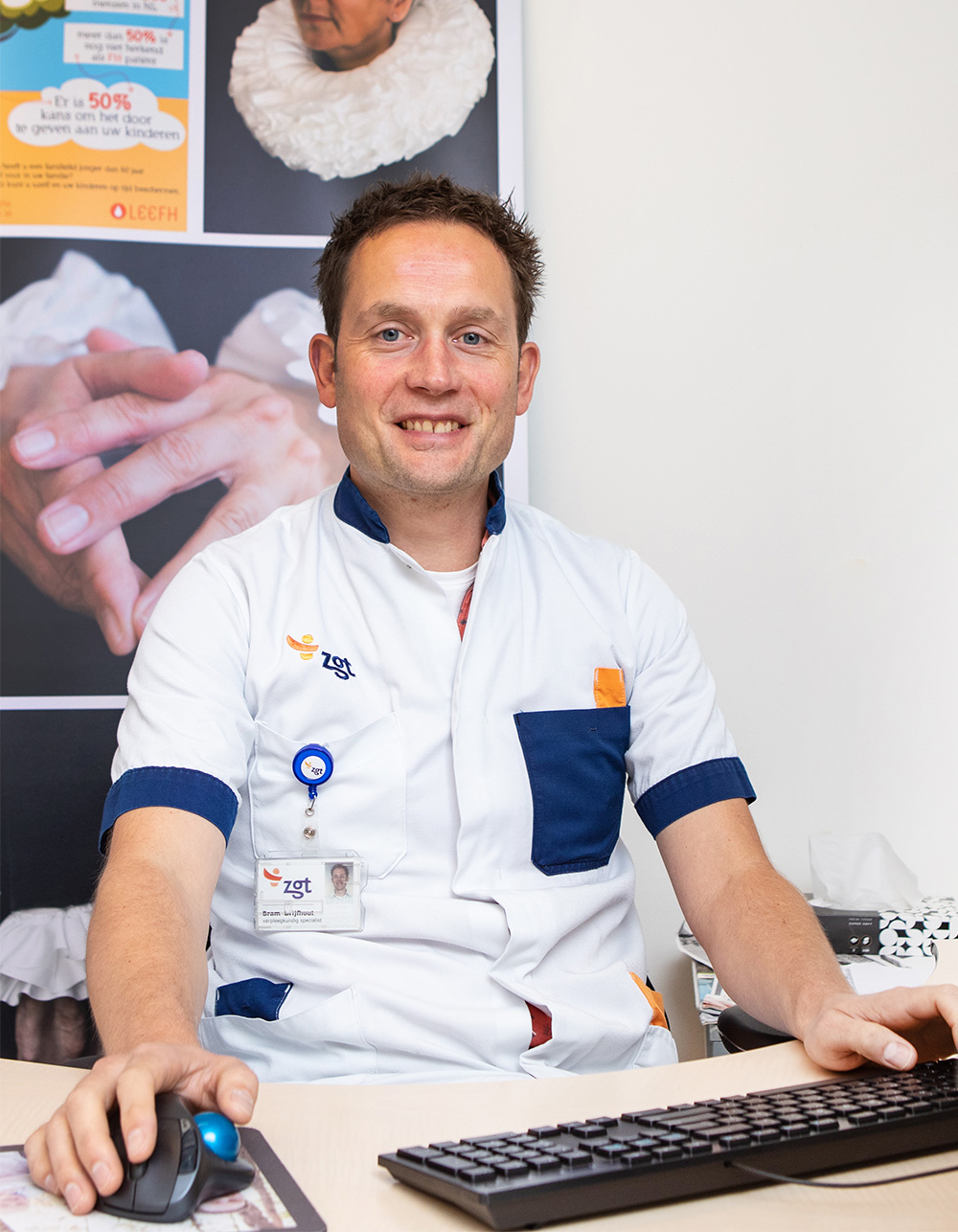
A Conversation with Bram Drijfhout – Nurse Practitioner at Ziekenhuis Groep Twente (ZGT)
- October 20, 2022
- The people of LEEFH, Regional LEEFH centers
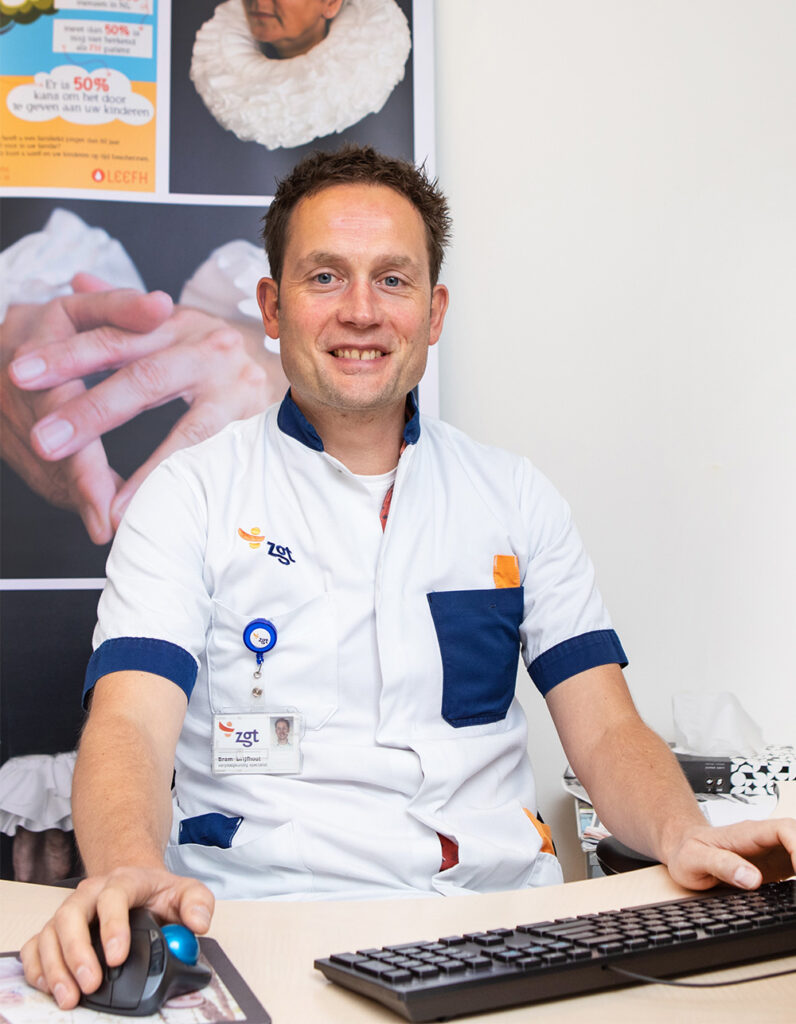
Bram Drijfhout works as a nurse practitioner at ZGT, Hengelo and Almelo locations. He is affiliated with the internal medicine department.
The ZGT has been a LEEFH center since the spring of 2020. Not that people with FH weren’t seen at this hospital before then.
Requesting DNA diagnostics, supporting people with FH—before we became a LEEFH center, we did that.
Even so," says Bram. "I do notice that people find it easier to locate us because of the 'LEEFH center' designation. It gives them the feeling that they are in good hands. The LEEFH consultant days are also a real added value. The last time we were at the AMC, where they explained how DNA diagnostics work and how this is done in the laboratory. We followed the path of a blood sample, which was very educational and interesting. That afternoon, pediatrician Bert Wiegman gave a lecture on FH and children. How do you tell a child that they have FH? He confirmed that it is better to discuss this early on, when a child is around eight years old. Then taking medication and living a healthy lifestyle become the norm. This is more difficult during puberty or adolescence.
Umbilical cord blood
As far as Bram is concerned, the issue comes up even sooner. “I recently submitted a few more requests for umbilical cord blood testing. In one case, the result was positive. It’s difficult news to deliver, but I make sure to explain right away that the recommendation is to start treatment when the child turns eight. That’s the beauty of it—you can actually do something about FH. I see it as my job to guide people—sometimes entire families—through that process.” That sometimes leads to funny situations. “I regularly have patients who say they’ve heard a lot about me. I think I’m quite the topic of conversation at birthday parties,” he laughs.
You can't feel FH
Bram thinks it’s very important to explain to patients why treating FH is essential. “If you have a headache, you take acetaminophen. That’s obvious. But you don’t feel FH or high cholesterol. That’s why people sometimes wonder why they need to take medication. We then discuss this together. I explain why it’s important to treat it. When I tell them that we want to prevent them from having to take much more medication in the future because of a heart attack, that usually gets the message across.”
Enjoying Life
Bram finds risk reduction to be a rewarding aspect of his work. “At FH, you work a lot with healthy people whom you want to keep healthy. I put the person first. My goal is for that person to feel as good as possible, with as little medication as possible. Without side effects, with good test results, and a lifestyle that supports that. My message is that people should enjoy life—after all, it’s short enough. I go over with them what’s good to eat and explain that exercise is important. If someone wants to have stamppot with a slice of bacon once in a while, they should definitely go for it. But not too often. If that does happen, we’ll work together to find a different routine.”
The sooner, the better
Bram’s work as a nurse practitioner doesn’t end at the reception desk of the ZGT’s internal medicine outpatient clinic. “I see it as my job to educate medical specialists at the hospital and primary care physicians in the region about FH. Due to COVID-19, that work was put on hold for a while, but we’ve picked it up again. The more people know about FH—how to recognize it and what to do about it—the better. Then people can live very healthy lives with it.”
Share
Share this article