A healthy lifestyle and adherence to treatment are great for your blood vessels!
- March 22, 2021
- The people at LEEFH
A Conversation with the Vascular Genetics Team at Erasmus
The vascular genetics team at Erasmus University Medical Center in Rotterdam has been supporting patients with cardiovascular diseases for many years. Despite their busy schedules, these healthcare professionals were happy to take some time out for an interview with LEEFH. How do they work together, and how do they view the latest developments regarding FH? Let’s start by introducing them. LEEFH spoke with four team members.
The team
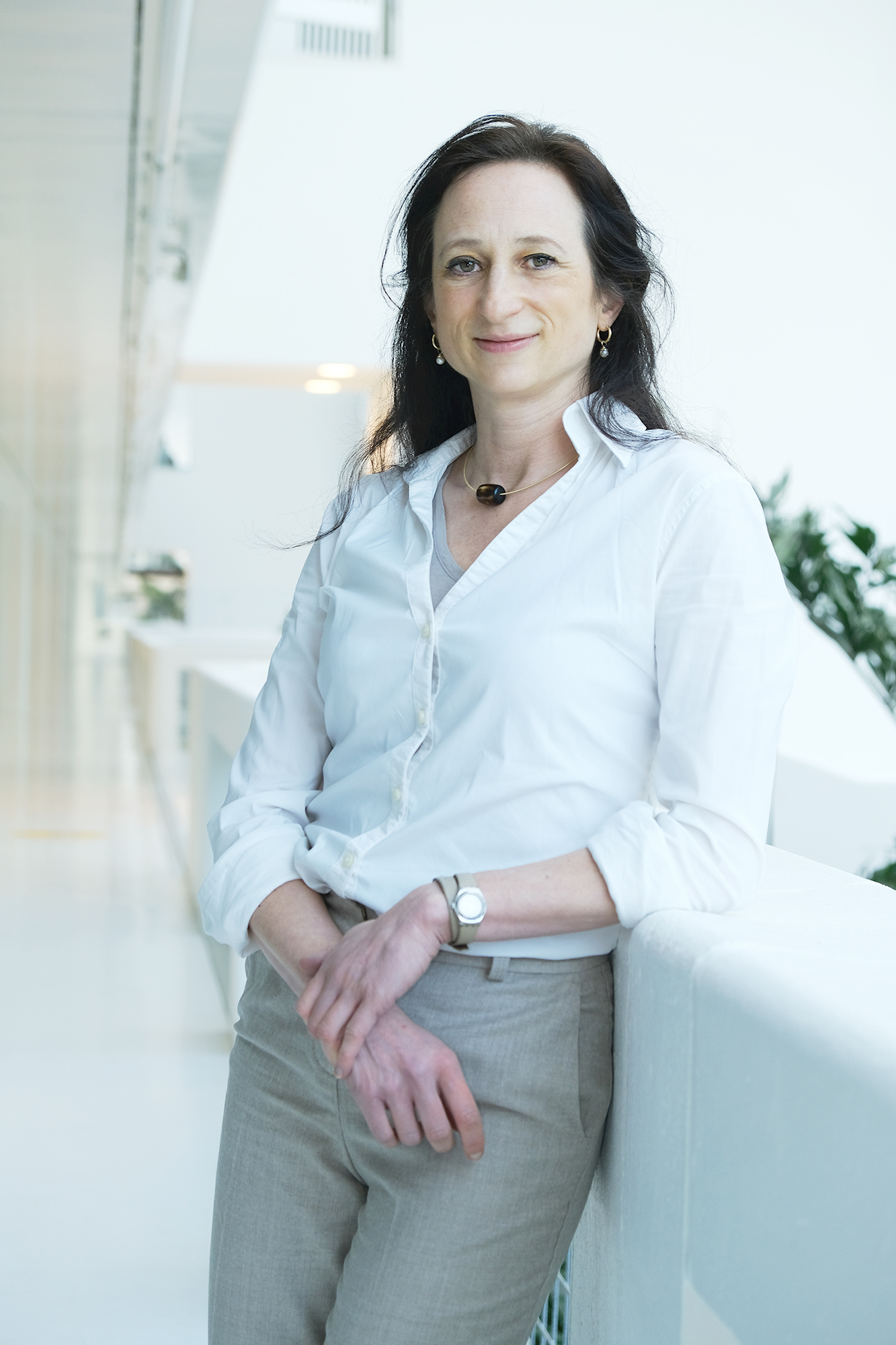
Dr. J. (Jeanine) Roeters van Lennep is an internist specializing in vascular medicine and works at one of the oldest LEEFH centers in the Netherlands. She also focuses on gender differences in healthcare, with a special focus on cardiovascular risk factors specific to women. Dr. Roeters van Lennep is also an associate professor at Erasmus MC.
Dr. J. (Annette) Galema-Boers, nurse specialist in vascular medicine. In addition to providing daily care to FH patients, Dr. Galema is closely involved in various FH-related research projects and obtained her PhD on the subject of: Management of Patients with Familial Hypercholesterolemia, cure and care. She also focuses on cardiovascular risk management for high-risk patients.
Ms. M. (Joy) Trosemito is a registered nurse and FH consultant. Family and DNA research coordinator. She conducts and coordinates family research and
DNA research (screening) for family members of patients with FH and for family members of patients with various genetic and hereditary mutations that cause cholesterol disorders. She also creates family trees for these patients.
Ms. K. (Kim) Steward research coordinator. Works as a research coordinator for vascular genetics with a focus on FH studies. She also works as a family research coordinator at the Sophia Children's Hospital. "We have started value-driven care for FH at Erasmus!"
“Quit smoking!”
During the COVID-19 pandemic
Due to COVID-19, we are communicating online. This means that the image occasionally falters, we don't always hear each other clearly, and sometimes we unintentionally talk over each other. But it quickly becomes clear that this is an enthusiastic and passionate team! Joy Trosemito is the driving force behind the family research for LEEFH. She has been working at the vascular clinic since 2016. She conducts DNA and family research. The patient is the contact person. Trosemito: "It is very important that we can offer the right treatment. We need to track down family members and screen them to assess the risk of cardiovascular disease. If, based on the results, we think a patient has FH, we discuss this with Dr. Roeters. Some patients deny having FH. We cannot force them to undergo treatment, but we do want to be an eye-opener.Kim Steward adds:" I think Joy is very good at explaining to people why treatment can be important for them. FH is a disorder that can have serious consequences, so it is important to explain clearly the benefits of family counseling and (preventive) treatment. A healthy lifestyle and adherence to treatment make the blood vessels very happy!
“A healthy lifestyle and adherence to treatment are great for your blood vessels!”
Doctor or nurse
Joy Trosemito is the driving force behind family and DNA research.
She has been working at the vascular clinic since 2016. She conducts family and DNA research. The first patient in the family is her contact person.
Trosemito: "Family research involves screening family members to determine how many of them have high cholesterol and cardiovascular disease. Based on this family research, DNA testing can be used. We discuss this with Dr. Roeters van Lennep."
DNA testing involves using DNA to test for FH and identifying family members of patients with genetic and hereditary mutations. DNA is used on the first patient in the family. Early detection of family members is very important, as is being able to offer the right treatment. There are also family members who deny having FH. We cannot force them to seek treatment, but we do want to be an eye-opener.
Kim Steward: “Face-to-face contact is a bit more complicated during the pandemic, but it’s still very important. It’s also helpful to be able to observe people’s nonverbal communication. If people don’t understand what you’re saying, that can obviously have very negative consequences. Of course, we prefer to see new patients face-to-face for their first visit. But for people we already know, we also use phone and video consultations.’
Trosemito: ‘Prevention is really so important. Early detection reduces the risk of cardiovascular disease. We also monitor people’s BMI and optimal blood pressure. During consultations, I also discuss the importance of a healthy lifestyle and adherence to treatment. That makes the blood vessels very happy! FH is treated not only with medication but also with a healthy lifestyle. If family screening and DNA testing are needed, patients should hear about this from their doctor first. Joy takes plenty of time to explain to patients what these tests involve and what the expectations are. I think it’s very important to focus on prevention and therefore explain to people the importance of family screening and genetic testing. ‘
Children with FH
Kim Steward does essentially the same work as her colleague Joy Trosemito, but she focuses on children. "I started working at this clinic in January of this year. I inform children and their parents about FH. From an early age, children are tested and monitored for high cholesterol, or they are referred to our center if there is reason to suspect FH, for example, if they have abnormal blood values and/or a family history of (suspected) FH. Sometimes children are even tested via umbilical cord blood. Sometimes parents don't want their child to be burdened with injections. We try to inform parents as well as possible about the risks. We do this mainly with materials from LEEFH. There is also a nice online children's book about FH. We use that a lot."
Both Trosemito and Steward find their work endlessly exciting. Steward: “It’s rewarding work.”
The diagnosis
Colleague Dr. J. (Annette) Galema-Boers is a nurse practitioner. "I see new patients and patients for follow-up appointments. They are referred by their general practitioner or other medical specialists or family members. In my work, I deal with three aspects on a daily basis: the patient's story (the medical history), the physical examination, and blood tests. Based on these three main aspects, I try to arrive at a diagnosis. Then I decide whether or not patients are eligible for DNA testing. Depending on the results, we roll out the family further. If we diagnose FH in a patient, we approach other family members to have them tested for the previously identified gene mutation.
Our colleagues Joy and Kim conduct family research and establish contact with other family members. They develop relationships with extended family. Meanwhile, the patient receives treatment from us. This may involve medication; there are various types of medication available, including statins and new injectable medication. In addition, I advise patients on healthy lifestyles. We identify the risk factors, including smoking, lack of exercise, unhealthy diet, and obesity. I work closely with Joy on this. We are not afraid to say it too often. Quitting smoking is very important! FH and smoking are a bad combination. If people smoke, we advise them to follow a special program. But high cholesterol is not necessarily related to lifestyle. FH is congenital.
Men and women
Dr. Roeters van Lennep adds: "There is a striking difference in the development of cardiovascular disease between men and women. We do believe that women are protected in some way by hormones. And, of course, many women have children. As a result, they are temporarily unable to take their FH medication. On average, women miss two years of medication per child. Women have longer periods during which they cannot be treated with medication. This is something that has been overlooked for a long time.
There are many differences and similarities in risk factors. Smoking is bad for everyone, but it’s even worse for women than for men! In addition, women are less likely to successfully quit smoking. At Erasmus, we’ve launched value-based care for FH. Together with a group of patients, we identified the values that are currently important to them. Among other things, this revealed that quality of life, adherence to treatment, and knowledge about FH are important. It is important for people to take control of their own disease—to realize that they can influence certain risk factors themselves.
Quality of life
Dr. Roeters van Lennep explains: "At Erasmus, we conduct research into the use of new medications. These are often large international studies that examine small groups of patients. We look at how people are doing in daily practice and in the long term. We have a registry of all patients who start taking PCSK9 inhibitors, the new cholesterol-lowering medication, and we keep very accurate records. It is really important to inform patients properly. We also conduct research into the quality of life of patients with a severe form of FH. How does the disease affect their daily lives? We conduct open interviews and research into new drugs. We are currently conducting a study on women and FH, which examines the menstrual cycle and blood values. The timing of cholesterol testing may play a role. We are looking into that. We are also conducting research into pregnancy and FH. At the clinic, we treat FH within the family as much as possible and treat children with FH together with their parents.
Inspire and motivate
Nurse specialist Galema-Boers explains: "It is very important to inspire and motivate people to adopt a healthy lifestyle. I regularly talk to patients to set goals together. Many patients are open to this and are even happy about it. The goals vary from patient to patient, of course. And it's the personal stories that make it so wonderful. For one patient, losing five kilos may be a good goal, for another it may be twenty kilos, and for a third patient it may be to quit smoking. Patients generally respond very well.
“We do things the other way around here”
Dr. Roeters van Lennep adds: "What makes healthcare unique is that we work in reverse. Most other patients in the hospital are ill. I prefer to treat people who are not yet ill. That is a different approach to care and treatment. It is a challenge to find that path with the patient. Making a plan can turn out differently for everyone. We are the advisors; the patients have to do it. The bond with the family is very special. FH is not something that goes away. Patients basically have it for life! At Erasmus MC, we hope to contribute to better care and to think a little further about the care of these patients. That makes our work very valuable.
Share
Share this article