“As a doctor, it is reassuring to know that LEEFH actively tracks down family members.”
- January 2, 2026
- No category
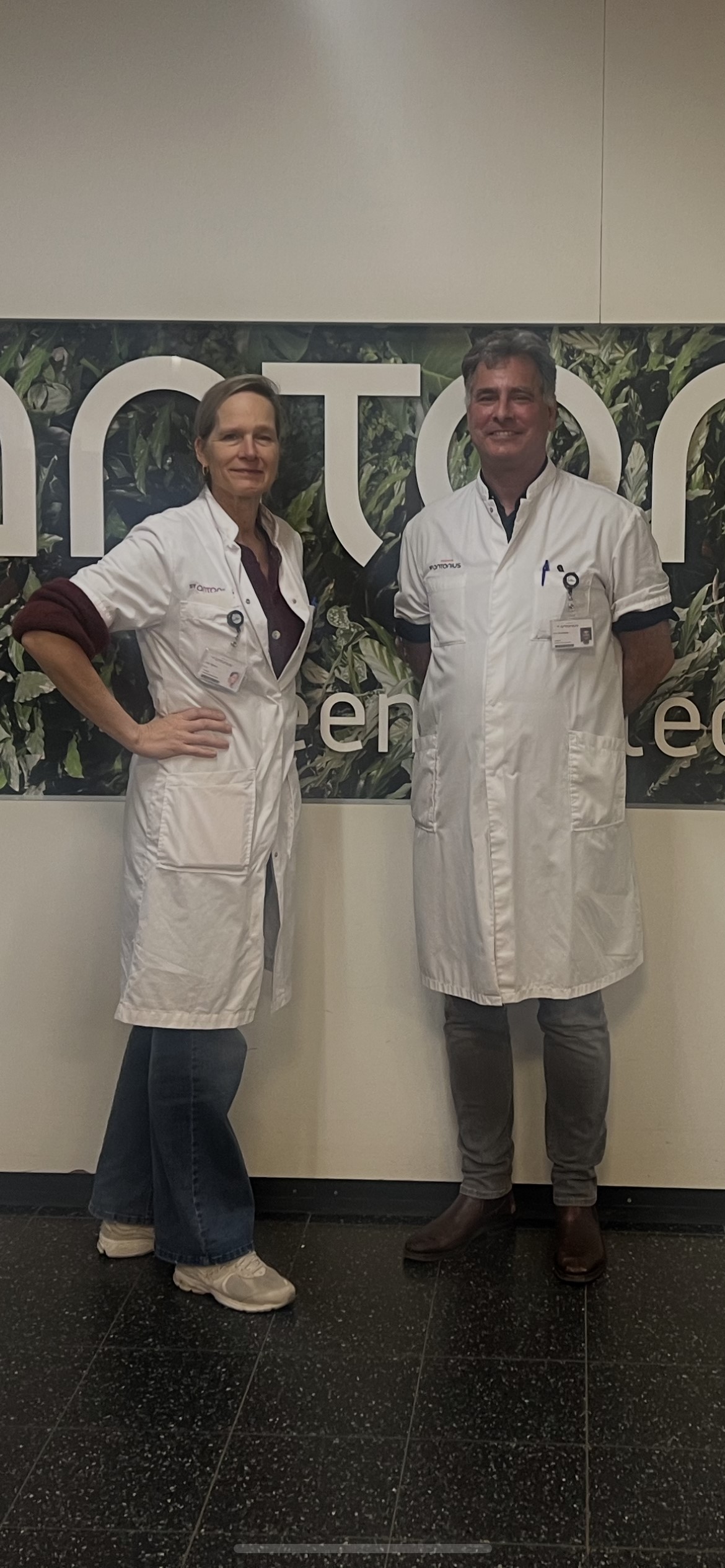
Patients with (suspected) hereditary forms of high cholesterol are welcome at the Internal Medicine outpatient clinic within the St. Antonius Hospital in the Utrecht region. Internist-vascular physicians Bart Rövekamp and Annemarie Pijlman provide care here for individuals with familial hypercholesterolemia (FH). Since 2024, St. Antonius has been a LEEFH center.
“Annemarie and I mainly provide FH care together," says Bart Rövekamp about the organization of FH care at St. Antonius. "We have a sizeable population of people with FH in the Utrecht region. We were already in contact with LEEFH, but we had never actually become a LEEFH center. It's great that this has now been finalized. We were already actively referring people to leefh.nl for information, but we left the cascade screening (after someone is diagnosed with FH, their family members are also tested to see if they have it too, ed.) to LEEFH. Now that we are a LEEFH center, we want to see how we can take on that task ourselves. The aim is to recruit a nurse specialist who can take on part of the FH care."
Fellow

In FH care at St. Antonius, there is close collaboration with pediatrics, says Annemarie Pijlman. "If we have a patient with children, we immediately call in a pediatrician to supervise the testing and FH care for children. We also have a vascular medicine fellow, an internist in the final year of training. So basically, another doctor."
Reassuring idea
When an index patient is found at St. Antonius, care is not limited to that one person. "I am proud of our FH care," says Bart Rövekamp. "We immediately look at the children as well, and if a woman with FH gives birth, we can test with umbilical cord blood. Screening the entire family is not yet optimal, but that is precisely why collaboration with LEEFH is so valuable. They can support this. As a doctor, it is reassuring to know that there is an organization that not only provides good information but also actively tracks down family members. It is extremely important for people to know that they have FH, because this can prevent many cardiovascular problems."
It is important not to force people to get tested, Annemarie Pijlman emphasizes. "It's a conversation between a patient and me. I explain the importance of knowing that you have FH and that you can keep your cholesterol levels under control with medication. But it's really up to people themselves to decide whether they want DNA testing. That works better too; if someone is committed to it themselves, it's easier to maintain a healthy lifestyle and use statins."
A rewarding task
Internists and vascular specialists consider people with FH to be a "very pleasant and diverse group." Annemarie Pijlman: "These are people who are generally not ill and whom you, as a doctor, can help to stay healthy. That is a rewarding task. It's also special that I treat entire families. Recently, I had a father and son in my office, which was really nice. I was able to explain to the son how important the medication is; you're more likely to accept that from a doctor than from your father. The father was relieved, the son felt taken seriously, and everyone was happy."
Healthy
If possible, they refer FH patients back to their general practitioner. "If someone is well adjusted to medication and there are no issues with their lifestyle, then they are in good hands with their GP," says Bart Rövekamp. "That saves them having to pay their deductible, and some people also prefer to go to their GP rather than the hospital. The hospital feels more like a place for sick people, whereas they are healthy. We do everything we can to keep it that way."
Share
Share this article