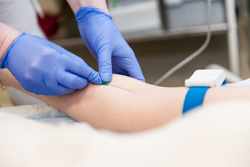
You don't need to have an empty stomach for a cholesterol test
- May 3, 2016
- Cholesterol
It does not matter much for determining a patient's lipid profile whether they are fasting or not. From now on, non-fasting blood sampling should be the standard, say experts in the European Heart Journal.
Until now, it has been recommended to determine a lipid profile, or 'cholesterol', after 8 hours of fasting. This usually means a fasting morning test. This is difficult for both patients and laboratories. Experts in the field of atherosclerosis and clinical chemistry have put their heads together, assessed the available evidence, and come to the conclusion that fasting is generally not necessary.
The difference between fasting and non-fasting values is not clinically significant (triglycerides 0.3 mmol/l higher, LDL and total cholesterol 0.2 mmol lower, HDL unchanged). The variation over time is similar for fasting and non-fasting values, as is the association with the risk of cardiovascular disease. Only in cases of very high triglyceride levels (>5 mmol/l) should a fasting measurement be considered. It is also wise to warn people not to eat a very fatty meal on the day of the blood test, as this causes a sharp rise in triglyceride concentration.
Sophie Broersen – Medical Contact
Share
Share this article